Playa Piskado
Playa Piskado, or Playa Grandi, is a free NW Curaçao fishing-cove beach. Wild green turtles feed a short swim from the pier in 1 to 4 metres of water.
Tours that visit Playa Piskado
Playa Piskado is free to snorkel with the turtles from shore. A guided run adds gear, the drive out to the far northwest, and someone who keeps the group at a respectful distance.
Run turtle-snorkel trips to the northwest? Get listed
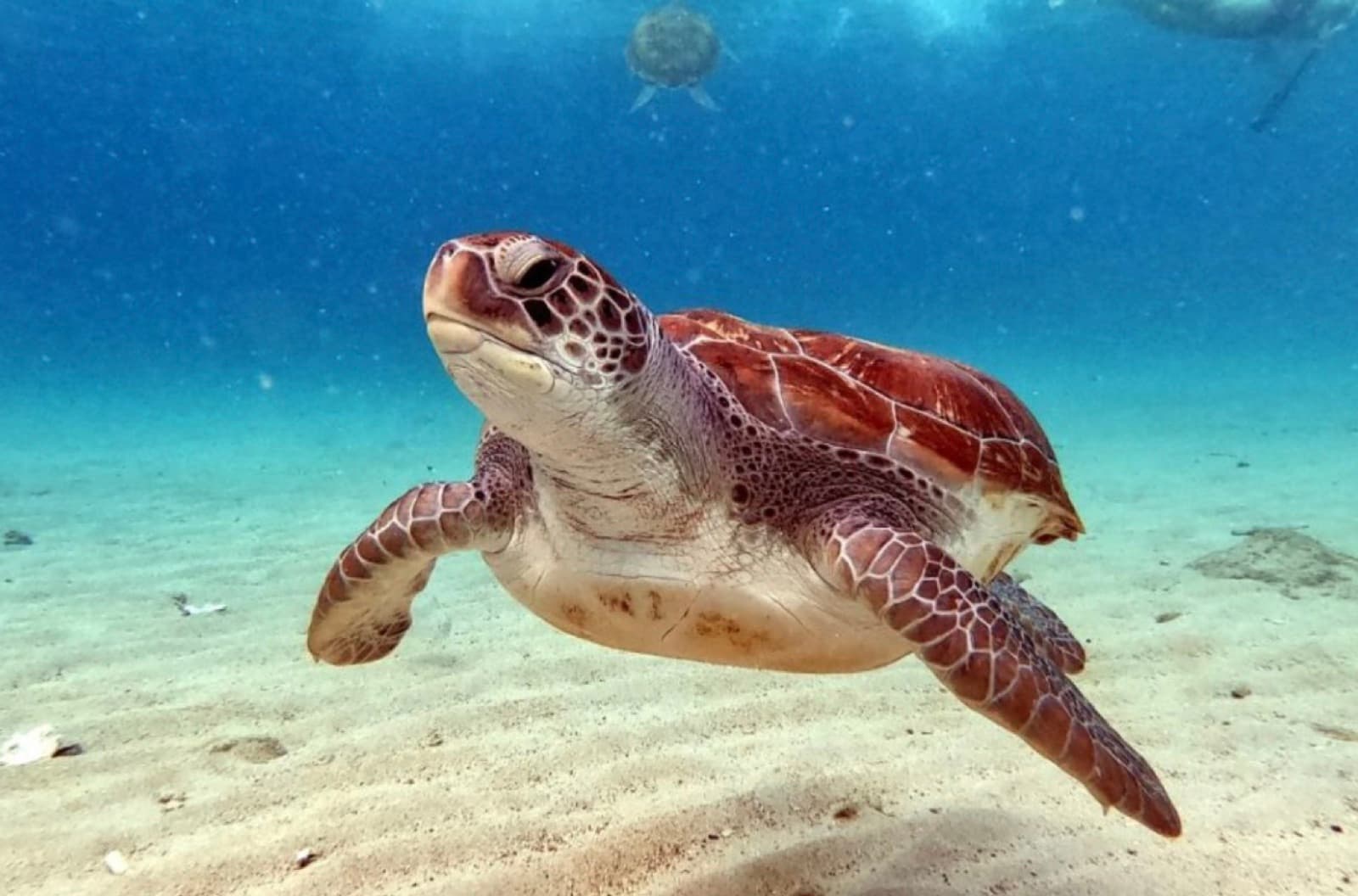
On the northwest tip of Curaçao, past Westpunt, a working fishing cove doubles as one of the surest turtle encounters in the Caribbean. Playa Piskado, known just as often as Playa Grandi, is a small beach built around a fishermen's pier. The boats go out at dawn and come back through the morning, and when the catch is cleaned the scraps go in the water. The turtles worked this out long ago. Now they hold in the shallows a short swim from the sand, wild green sea turtles you can slip into the water beside and watch from close range, for free, off the beach, with no boat and no ticket. There are very few places on earth you can do that. The beach itself is small and rough and the water by the pier is not pretty. The turtles are why you come, and they deliver.
How to get to Playa Piskado
A normal rental car reaches Playa Piskado. The drive west from Willemstad is paved and signposted the whole way, no four-wheel drive needed, and takes roughly three-quarters of an hour. Small free lots sit on the clifftop above the cove. They are the catch: they fill fast, and when they are full people line the shoulder.
There is a bus, but it is impractical for a beach day: it runs only every few hours and leaves you a walk from the cove. For most people a car is the way here, and it pairs Piskado neatly with the beaches just south. A scooter works too in fair weather, though the far-west distance is a lot of open road.
Snorkelling with turtles at Playa Piskado
Here is how it works. The turtles are wild, but they are also habituated. Generations of them have learned that the pier means food, so they gather in the cove and wait, mostly young green turtles, with the occasional hawksbill and, rarely, a loggerhead. You do not have to go far to find them. They feed in the shallows near the pier, often just a short swim from the wharf, and on a good day you share the water with several at once. Below them the seabed holds more than turtles: a sunken statue of Neptune, corals and sea fans, snappers and trumpetfish and parrotfish, the odd moray back in the rock.
The entry is off the beach or beside the pier, over stones and pebbles, so water shoes help. And here honesty serves you better than a brochure would. The beach is small and rocky, not a scenic strand. Right by the pier, where the fishermen throw the fish waste that draws the turtles in, the water can turn cloudy and smell strong. Some visitors love the whole thing; some leave after fifteen minutes. Both reactions are real and both are fair. Come for the turtles rather than the beach, go in a little away from the pier for cleaner water, and you get the best of it.
How you behave around the turtles matters, because they are a protected species and because crowding is what spoils this place. Keep at least two metres back. Never touch them: it is illegal, and a cornered turtle can bite. Do not feed them, chase them, or put yourself between a turtle and the surface it has to reach to breathe. Leave the flash off. The cove packs out mid-morning when the tour buses arrive, and a crowded cove is exactly where turtles get hemmed in and harassed for photos, so an early, quiet visit is better for you and for them.
One thing you may run into. The beach is free, but the feeding is informal, and a fisherman may ask for a tip. In at least one account a visitor was charged around ten US dollars to lure the turtles in closer for a photo. Other visitors report no one asking at all. There is no official fee at Playa Piskado, and you do not need anyone to bait the turtles closer to see them. What you give, if anything, is your call.
Playa Piskado vs Playa Lagun
Both are free, both are northwest fishing coves, and both are turtle-snorkel spots, so they get compared constantly. The honest split is certainty against setting. Playa Piskado is the famous one and the surer bet for turtles: the pier keeps them here, so they are usually present, in numbers, and close in. The trade is the setting. Piskado is busier, the beach is small and rocky, and the water by the pier can turn cloudy. Playa Lagun is the calmer, prettier cove, sheltered by cliffs, with seahorses along the rock walls as well as turtles. The trade there is chance: turtle sightings are hit-or-miss, some days a few and some days none. Want the turtles as close to guaranteed as wild turtles get? Piskado. Want a quieter, calmer swim with better odds of having the cove to yourself? Lagun. With a car you can do both in a single morning.
Playa Piskado: best time, conditions & what to bring
Playa Piskado runs on the fishing schedule. The boats come back through the morning and the turtles follow the scraps, so from mid-morning on you will very likely find them. Get there before about half past nine, though, and you beat the tour buses that pack the small lot and the cove from around ten.
Playa Piskado — FAQ
Is Playa Piskado the same as Playa Grandi?
Yes. Playa Piskado and Playa Grandi are two names for one beach, a small fishing cove on the far northwestern tip of Curaçao, about 45 to 50 minutes' drive from Willemstad.
Can you snorkel with turtles at Playa Piskado?
Yes. Wild green turtles gather in the shallows off the fishermen's pier, drawn by the fish scraps, and you can snorkel with them straight from the beach for free, no boat or ticket needed.
Are the turtles always there?
They are resident year-round and present through much of the day, kept in the cove by the feeding off the pier. They are wild, so a sighting is never fully guaranteed, but Piskado is the most reliable turtle spot on the island.
Can you touch the turtles?
No. Keep at least two metres back, do not touch, feed, or chase them, and never block a turtle's path to the surface. Touching them is illegal, and a cornered turtle can bite.
Is Playa Piskado free?
Yes, it is free to enter and snorkel, and parking is free. There is no official fee. The turtle-feeding is informal, and a fisherman may ask for a tip, but you do not need anyone to bait the turtles closer to see them.
What time should you go?
The turtles are around through the day, but the cove and the small lot fill with tour buses from about ten in the morning, so arrive before half past nine for calm water and space. Early morning is quietest.
Is the beach nice?
Honestly, no, not by Curaçao's standards. It is small and rocky, and the water near the pier can turn cloudy and smell of fish waste. Come for the turtles, not the beach, and go in a little away from the pier for cleaner water.
Do you need a car?
Effectively yes. The bus runs only every few hours and drops you a walk away, so a rental is the practical way out to the northwest tip. The beach pairs well with the Knip beaches nearby.
Is it safe for beginners?
The water is shallow and usually manageable, which suits newer snorkelers, but the main hazard is boat and pier traffic. Stay well clear of the working pier, wear water shoes for the rocky entry, and mind that there is no lifeguard.
Is it ethical to snorkel with the turtles here?
It can be, if you do it well. Keep your distance, do not touch, feed, or chase the turtles, keep the flash off, and go early to avoid the mid-morning crowds, since crowding is when turtles get harassed. Watching wild turtles feed on their own terms is fine; cornering them for a photo is not.
Explore Curaçao
Run tours to Playa Piskado?
List your Curaçao experience on Faer and reach travellers planning their trip before they land.